itemscope="" itemscope=""

Chinese Counterfeiter Gets Life Sentence

In a recent case out of China’s Heyuan Intermediate People’s Court, Xiao Zhenjiang, the leader of a counterfeiting gang was sentenced to life in prison and all of his belongings and property were confiscated. The arrest happened after public security officials last year raided his factory in the small city of Heyuan, according to a statement on the court’s website.

Officials found 100 million yuan (about $15.7 million) worth of fake Hermes purses, the statement said. Three accomplices were sentenced to seven to 10 years in prison and were handed fines of 500,000 yuan to 800,000 yuan ($79,000 to $126,000). According to the court, Xiao was reportedly a repeat-offender and the gang was allegedly passing off the goods as genuine.

This case stands out due to both the severity of the sentences as well as the huge amount of counterfeit goods at stake. Legal experts said that the sentence is unusually severe, as the average criminal sentence handed to counterfeiters is three to seven years in prison.

Another reason that the decision is of interest is that the court chose to refer to the market value of the goods as if they were genuine, not the street price for the knockoff purses. This is something seldom seen in Chinese opinions and has important implications in terms of criminal sentencing as value determines whether prosecutors are interested in pursuing the case in the first place. The decision marks a major victory for brands that have been pushing for such a calculation of value for years and may be a sign that China is beginning to take counterfeiting seriously.

Given recent episodes of death and serious illness related to counterfeit pharmaceuticals and health products sentences for those behind the fake products have been increasingly severe. It’s rare however for such a sentence when the offender was primarily making counterfeit luxury goods.

Though the Chinese have often been accused of being soft on IP infringement, this latest example seems to run counter to that notion. Many Western observers hope that the severe penalties have the intended effect of reducing the rampant piracy that exists in China.

Source:Hermes counterfeiter gets life sentence in China,” by Laurie Burkitt, published at MarketWatch.com.

See Our Related Blog Posts:

Australian High Court Approves End to Logos on Cigarette Packaging

Current U.S./North Korea Dispute Revolves Around Mickey Mouse

Australian High Court Approves End to Logos on Cigarette Packaging

A recent court decision by the Australian High Court means that the country will become the first to require that cigarettes be sold in uniform packages, eliminating the painstakingly designed logos and marketing messages created by tobacco companies.


The High Court of Australia yesterday dismissed claims by Japan Tobacco Inc., British American Tobacco Plc., Philip Morris International Inc. and Imperial Tobacco Group Plc that the decision by the government served as an illegal seizure of their intellectual property by preventing the display of trademarks on their cigarette packs.


The law, set to take effect on December 1, 2012, will require that cigarettes be sold with no company logos and with the same font for all brands on a dark brown background. Graphic health warnings, showing the harm the disease can cause, will cover 90% of the back of the packaging and 70% of the front.


The tobacco industry is worried about the precedent such a decision sets. Once one country acts to implement a tobaccos-control measure, it becomes that much easier for other countries to follow suit. For example, once Canadian officials decided to post pictorial warnings on their cigarette packages in 2001, 50 other nations followed suit. New Zealand has announced that it has an interest in pursuing similar measures.


British lawmakers have been considering similar legislation, but discussions broke up after the International Chamber of Commerce Raised concerns. The ICC’s director of policy explained at a government hearing how the rule would likely breach several of the U.K.’s international intellectual property agreements, including various WTO obligations.


Talk of such a move in the U.S. has been minimal, as tobacco companies hear have relied on the First Amendment to protect their ability to use their trademarks. They claim that any move to limit their ability to use their logos would amount to government interference with their right to freedom of expression.


Philip Morris isn’t taking the matter lying down and has said the Australian law breaches an agreement with Hong Kong and will result in possibly billions of dollars in damages for the company. The tobacco giant also announced that it plans to pursue claims against the Australian government for the loss in international arbitration.


Source: “Tobacco Packaging,” by Victoria Slind-Flor, published at Businessweek.com.

Wannabe fashionistas painting soles of their shoes to create faux Louboutins

Women desperate to appear on the cutting edge of fashion have started heading down the street to their local craft store. Why? To buy little tubes of red paint to paint the soles of their shoes to imitate the iconic Louboutin heels on a budget.

In England, sales of red glossy paints with names like Duracoat’s ‘Flame’ and ‘Show Stopper’ have increased by a whopping 40% compared to the same period last year. One big craft supply store in the United Kingdom, Homebase, says the reason is clearly thanks to the recent trend of copying the nearly thousand-dollar shoes.

Christian Louboutin, the renowned designer, came up with the idea in 1992 after painting an assistant’s bright red nail polish on the bottom of a pair of shoes to add some energy to the otherwise dull heels. The move sparked a trend and flashing red soles was seen as a mark of person’s fashion pedigree. Women are now coming into stores with pages torn out of magazines to match the right color to the designer shoes. The staff at such stores is encountering questions about how to properly paint on leather or rubber surfaces.

One woman admitted to knocking off the shoes after wanting to wear them to a friend’s wedding but knowing she would not be able to afford the real deal. She decided to instead go out and buy a pair of $20 black pumps and a small tube of red paint to get the desired look. She painted them carefully and let them dry overnight and voila! Perfect faux Louboutins. “I received so many compliments at the wedding about my gorgeous shoes but I didn’t have the heart to confess they were DIY fakes. It was such a success I plan on doing the same for another pair of heels.”

These wannabe fashionistas with tastes greater than their pocketbooks do not appear to be concerned about the ongoing trademark battle taking place between the Louboutin and Yves St. Laurent SAS/France fashion houses. Louboutin has sued Yves St. Laurent over sales of red-soled shoes which it says violate Louboutin’s trademark.

The designer himself said that the suit is not over the color, but instead about “a precise red, used in a precise location.” He says that colors play a part in a brand’s identity and gives the examples of Ferrari red and Cadbury’s purple packaging. Some have said trademarking a color is ridiculous, but Louboutin has friends in high places with Tiffany filing its own brief arguing that a color – like the blue of its famous Tiffany boxes – can indeed be trademarked and should not be allowed to be copied.

Source:Cash-Strapped Women Are Painting Their Shoe Soles Red To Look Like Louboutins,” published at BusinessInsider.com.

See Our Related Blog Posts:

Louis Vuitton Sues Over Fake Bag in “The Hangover: Part II”

New Patent Exchange For Exchanging Patent Rights

Merry Christmas!

U.S. Patent No. 6,350.499 entitled “Suspended Christmas Tree”

Worldwide Licensing Revenues Estimated at $180 Billion

According to a recently published report by the World Intellectual Property Organization, worldwide royalty and licensing revenues amount to an estimate $180 billion per year. The report concludes that growing demand for such rights is stimulating innovation in business. According to the report, royality and licensing revenue was only $2.8 billion in 1970 and $27 billion as late as 1990.
The report notes that intellectual proptery (IP) “allows firms to control which knowledge to guard and which to share so as to maximize learning – a key element of modern open innovation strategies.”
While the traditional model has been for IP to be largely developed in the richer countries, the fastest growth in IP is now coming from the less developed countries. The reports asserts that the gap between richer and poorer countries is narrowing.

German Court Enjoins Sale of Samsung Tablet Throughout Most of Europe

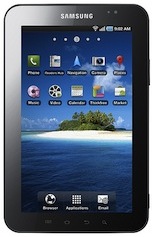
A German judge has issued a preliminary injuction (a temporary injuction until the case can be decided on the merits) against Samsung which bars the company from selling the Galaxy Tab tablet PC throughout most of Europe. As we noted earlier with respect to the iPhone versus Samsumg Galaxy smart phone controversy, much of the dispute involves trade dress issues.  Under the Lanham Act (the same legislation protecting trademarks), a product’s visual appearance and packaging (for example, the shape, color, or materials used for a product) can be legally protected. According to a statement by Samsung, “Samsung is preparing to challenge this preliminary order in the court in order to have the injunction lifted as soon as possible.” We interpret this to mean that the company is planning on appealing the injunction order.

Jam Wars

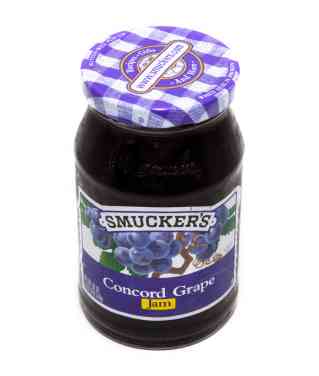
As reported in Ad Week, J.M. Smucker, the company that makes Smucker’s preserves, has filed a complaint (see below) in federal court seeking a declaratory judgement that it is not infringing on upscale French preserves maker Andros (maker of the Bonn Maman brand of preserves). The issue relates to usage of the distinctive Ginham design on Smucker’s lids. Under a 27-year old agreement, Bonn Mama agreed to allow Smuckers free usage of the Ginham design so long as it did not compete directly. Because Monn Mamam sold its preserves to upscale markets while Smuckers did not, the companies had been coexisting peacefully. However, all that changed when Smuckers launched its new premium Orchard Finest line of preserves.  Andros sent Smuckers a cease and desist letter, commencing the  “Jam War” as it is being called in the industry.

Smuckers v. S.A. Andros

What about trade dress?

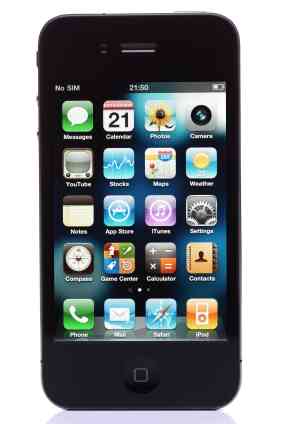
Apple iPhone

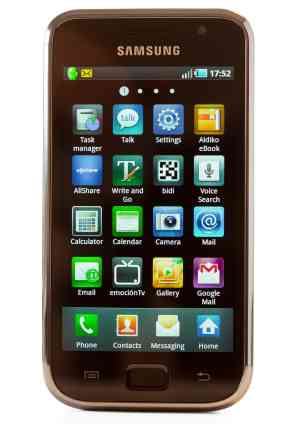
Samsung Galaxy

Samsung’s Galaxy smart phone sure looks a lot like the Apple iPhone. But can the way a product looks be legally protected?  The answer is that in many cases, it can. This week, Apple filed suit against Samsung for a variety of alleged intellectual property infringements.  While the media largely focused on the patent dispute, scant attention was paid to the fact that Apple also sued Samsung for trade dress infringement. In this post we look at the concept of trade dress.

Under the Lanham Act (the same legislation protecting trademarks), a product’s trade dress can be legally protected. Trade dress refers to the visual appearance of products and packaging. For example, the shape, color, or materials used for a product. Other examples include the design of a magazine cover or a greeting card.

Even the way in which a service is provided may be protectable under trade dress.  For example, in the Two Pesos (112 US 2753) case, the US Supreme Court ruled that the decor of a Mexican restaurant could be protected. In its trade dress registration, the restaurant described the decor as follows: “a festive eating atmosphere having interior dining and patio areas decorated with artifacts, bright colors, paintings and murals. The patio includes interior and exterior areas with the interior patio capable of being sealed off from the outside patio by overhead garage doors. The stepped exterior of the building is a festive and vivid color scheme using top border paint and neon stripes. Bright awnings and umbrellas continue the theme.”

In its complaint, Apple claimes that Samsung infringed on the following elements of the Apple iPhone trade dress:

a rectangular product shape with all four corners uniformly rounded;

the front surface of the product dominated by a screen surface with black borders;

substantial black borders above and below the screen having roughly equal width and narrower black borders on either side of the screen having roughly equal width;

a metallic surround framing the perimeter of the top surface;

a display of a grid of colorful square icons with uniformly rounded corners; and

a bottom row of square icons (the “Springboard”) set off from the other icons and that do not change as the other pages of the user interface are viewed.

The lawsuit cited several of Apple’s trade dress registrations (U.S. Registration Nos. 3,470,983, 3,457,218, 3,475,327).

For entrepreneurs, the takeaway is to make sure that you consider trade dress protection for the various products and services you offer.